


Mountain Safety
Safety & Risk Awareness
Patrollers, first aid & safe slopes. Our Safe Slopes team is on the hill day and night — here is everything you need to ride within your limits and look out for one another.
Summer Safety
Bike Park Safety Information
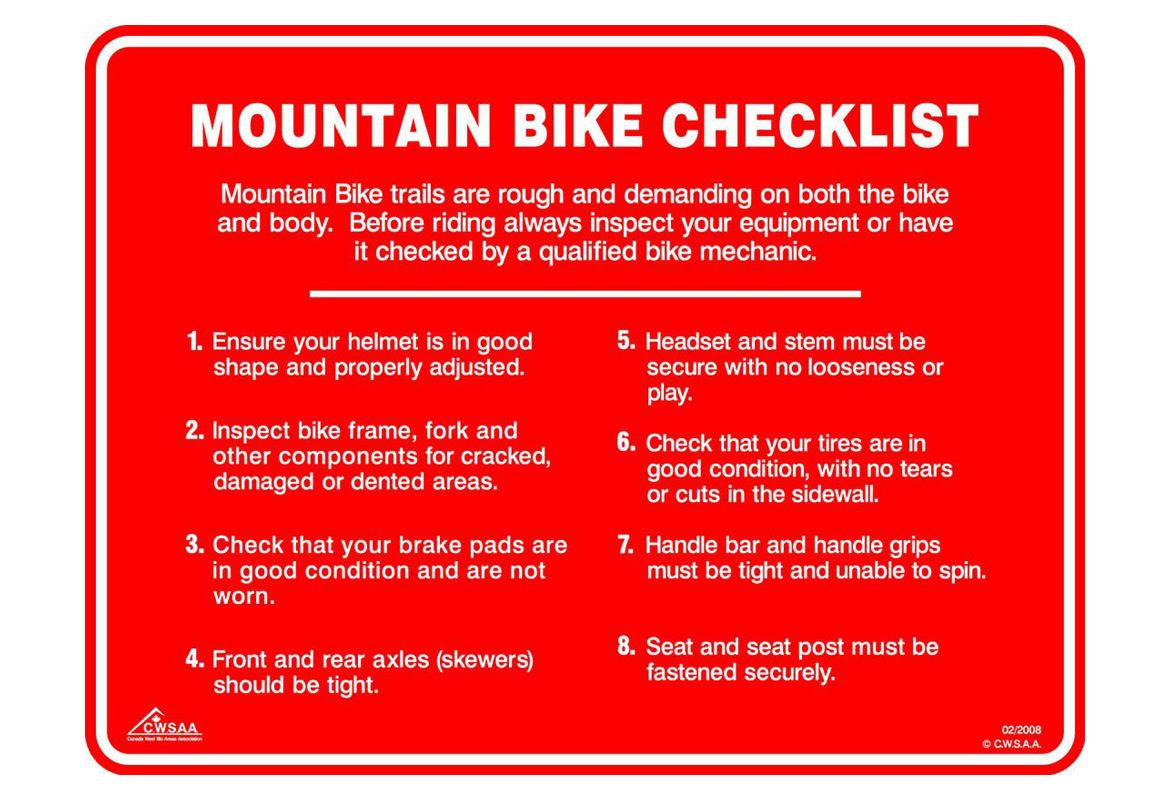
Mountain biking on the trails of the Mount Washington Bike Park is demanding on both the bike and body. Please follow the safety information on this page to help you get the most out of your day.
All Riders, Parents & Guardians
Injuries are a common and expected part of mountain-biking. We strongly suggest that full-face helmets, full-length gloves, biking armour and a full-suspension bike be used in the Bike Park. If you’re new to mountain-biking at Mount Washington, or the parent or guardian of a younger rider, please familiarize yourself with the bike park and the mountain-biking activities we offer — introductory mountain-biking lessons and beginner terrain are available and recommended. More challenging terrain and features should not be attempted unless the rider has the appropriate skills, experience and equipment to effectively negotiate such trail sections.
Bike Park Policies
Age Policy
Children 5 and under are not permitted in the bike park. Ages 6–12 must be accompanied by a parent/legal guardian (19+) when riding. Ages 13–15 are strongly recommended to be accompanied by a parent/guardian (19+). The parent or guardian must sign the bike-park waiver for the child at the time of purchase at the ticket kiosk.
Bike Size
20-inch wheels are the minimum wheel size to load on our bike carriers safely.
Brakes
All bikes should have one functioning brake per wheel. Disc brakes are recommended — steep grades need disc brakes for adequate stopping power. Cantilever brakes increase the fatigue factor as more effort is required to maintain control.
Suspension
Full-suspension bikes are recommended for the terrain you’ll find on the trails. Ensure your suspension is tuned properly and set up for your body weight and riding ability.
E-Bike Policy
Mount Washington is committed to offering a safe, fun and sustainable mountain-biking experience. With the growing popularity of e-bikes we have established the following policy to keep harmony between all riders and to protect our trails and infrastructure. E-bikes permitted in the park must be purpose-built for off-road mountain biking (e-MTBs).
E-Bike Classes
Only Class 1 e-MTBs are permitted on lift-accessed downhill trails.
| Class | Description |
|---|---|
| Class 1 | Pedal-assist only (no throttle), with motor assistance up to 20 mph (32 km/h). |
| Class 2 | Throttle-assisted, with a top speed of 20 mph (32 km/h). |
| Class 3 | Pedal-assist only, with motor assistance up to 28 mph (45 km/h). |
Bike Type Requirements
To be allowed on our lift-accessed downhill trails, e-bikes must be designed for mountain biking with full suspension or appropriate downhill/trail geometry; equipped with high-performance hydraulic disc brakes and quality suspension; fitted with knobby mountain-bike tires suitable for rough terrain and trail braking; and built to withstand the rigours of lift-served downhill riding.
Permitted
- Class 1 e-MTBs only
- Full suspension or trail/downhill geometry
- Hydraulic disc brakes & quality suspension
- Knobby mountain-bike tires
- Built for lift-served downhill riding
Not Permitted
- Street tires or minimal tread
- Rear racks, baskets or fenders
- Upright seating position or step-through frames
- Limited suspension or comfort-focused components
- Bikes designed for urban, commuter or recreational-path use
Ride Smart
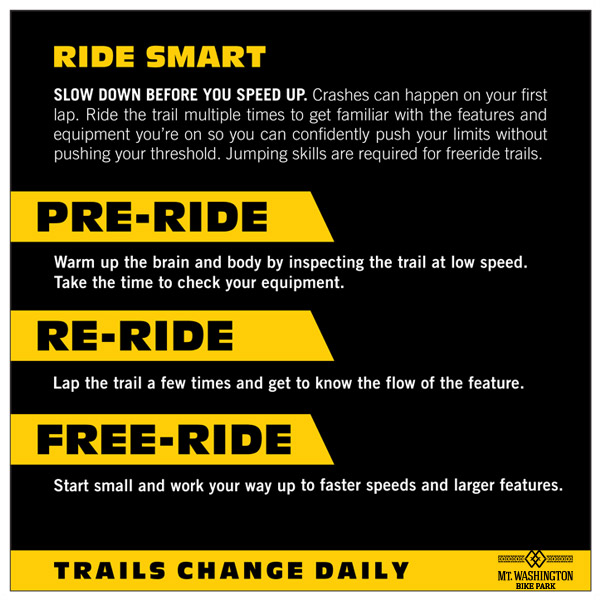
Slow down before you speed up.
Crashes can happen on your first lap. Ride each trail multiple times to get familiar with the features and the equipment you’re on, so you can confidently push your limits without pushing your threshold.
Pre-Ride
Warm up the brain and body and inspect the trail at low speed.
Re-Ride
Lap a trail a few times and get to know the flow of the features.
Free-Ride
Start small and work your way up to faster speeds and larger features. Jumping skills are required for FreeRide trails.
What Bike to Ride
Riding the Bike Park requires a different type of mountain bike than you might be used to. A full-suspension bike with the right geometry and components for downhill riding will make your day in the park safe and fun.
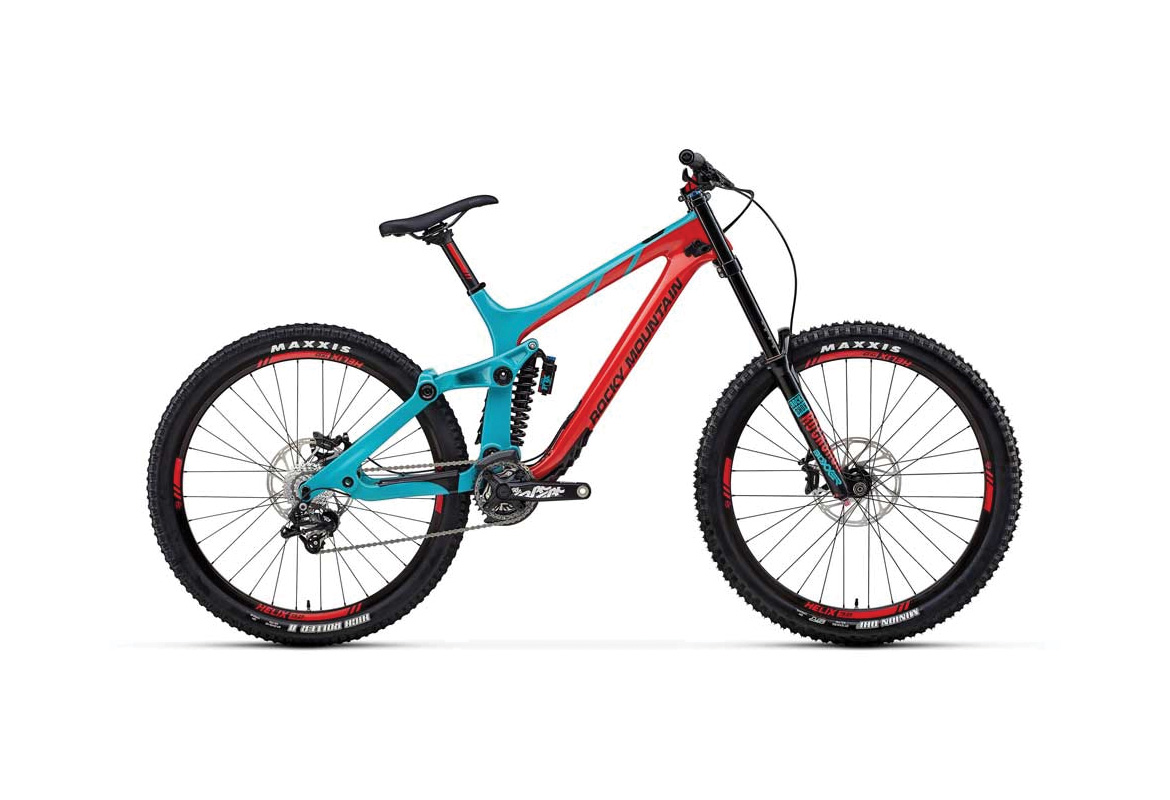
DH / Downhill
Downhill-specific bikes are intended for all levels of riders who want to get the most out of the Bike Park. A full-suspension, downhill-specific bike like the Rocky Mountain Maiden Park handles the park’s technical and free-ride terrain the best and is designed for descending, not ascending. We recommend this type of bike for any level of rider.
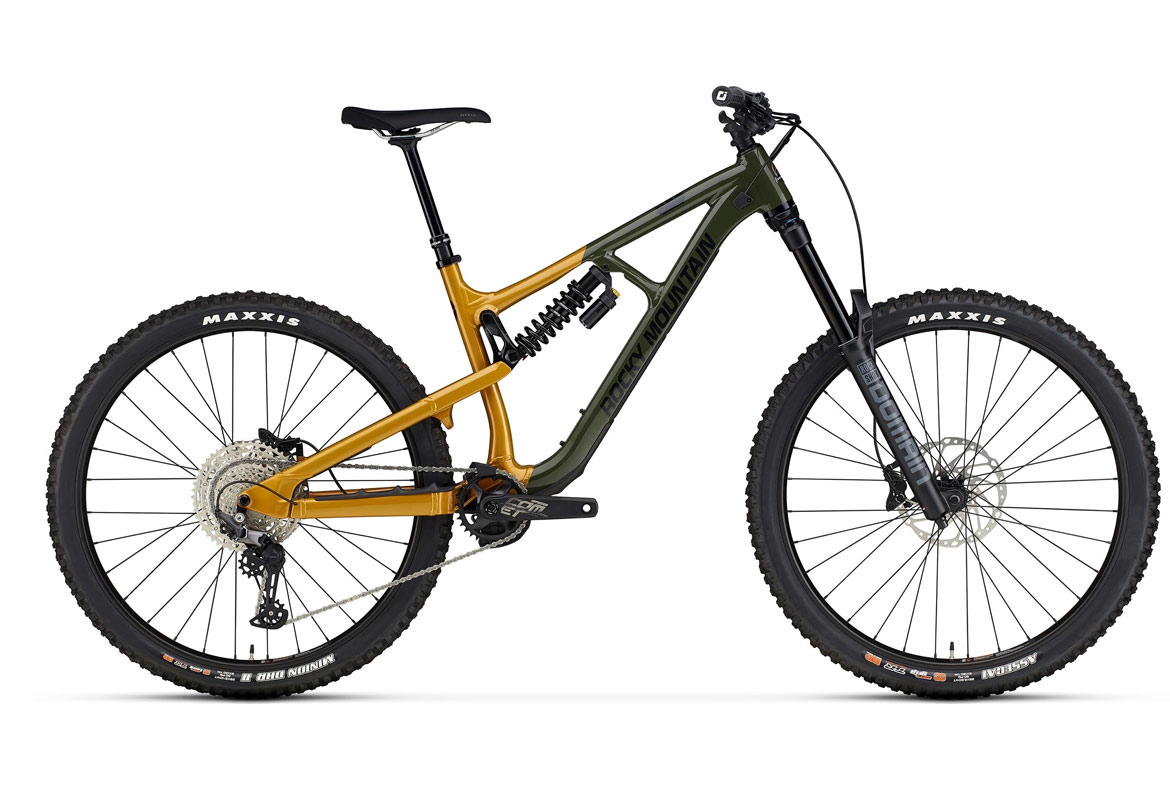
All-Mountain
All-mountain bikes combine front and rear suspension with a more upright design, letting riders descend yet ascend when needed. At minimum, park riders should have an all-mountain full-suspension bike similar to the Rocky Mountain Altitude 30 — best suited for beginner and intermediate terrain only. Note: uphill riding is not permitted in the bike park.
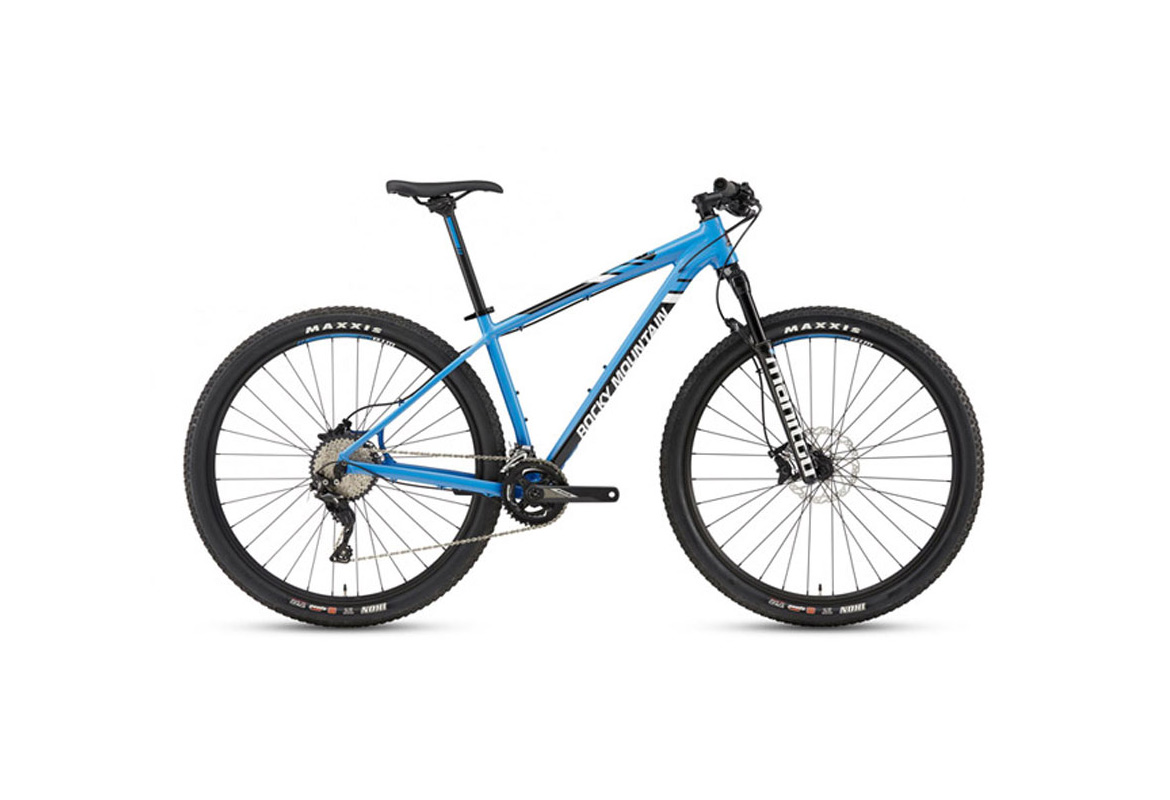
Cross Country
Recommended for riding our XC Finger Trail. Cross-country bikes generally have less suspension than most mountain bikes, making them ideal for pedalling long distances. Most XC bikes are hard-tail (no rear suspension) and are not ideal or recommended for our downhill trail network.
Before You Ride
- Have you purchased your ticket?
- Are you familiar with the bike-park signage?
- Do you have hydration?
- Do you have a trail map?
- Do you have a mountain bike in good working order?
- Do you have protective gear?
Please note: our bike carriers can only accommodate mountain-bike wheels 20 inches or larger.
Lifts
Boarding the lift requires significant strength when loading a bike, and children may need assistance. If you’re unfamiliar with the bike-loading process, let our staff know and they can walk you through a demonstration before you proceed to the lift.
Equipment
The bike-park trails are designed for full-suspension mountain bikes — they’re rocky and bumpy, and much harder without quality suspension. Steep grades require disc brakes for adequate stopping power. All participants should ride a properly sized bike and be able to stand over the seat with feet flat on the ground. Junior DH rentals are available at the Rental Shop.
Clothing
Protective clothing and equipment is mandatory for young riders. The best protection from abrasion is a properly fitted full-faced helmet, gloves, long pants, long sleeves, leg armour, arm armour and solid running shoes.
Trails
Risk increases with difficulty. Black trails often have significant drops and jumps that require skill and experience to navigate. Many difficult trails have a “gate-keeper” feature at the top, designed to keep riders without the necessary skills off terrain beyond their ability — don’t ride around these features. Young riders become a hazard to others if they can’t ride a trail or move out of the way. Children should be accompanied by an adult at all times and monitored regularly for fatigue.
Bike Responsibility Code
Mountain biking involves elements of risk that common sense and personal awareness can help reduce. Please adhere to the responsibility code, and share a safe experience with others.
- Ride in control and within your ability level. You must be able to avoid other people or objects.
- Stay off the lifts and trails if your ability is impaired by drugs, alcohol or fatigue.
- All riders must wear a helmet. Other protective equipment is strongly recommended.
- Inspect your bike, or have it checked by a qualified bike mechanic, before you ride.
- Be sure you have the physical dexterity, ability and knowledge to safely load, ride and unload lifts. Ask the lift attendant for assistance if you need it.
- Be aware of changing conditions on trails and features. Inspect features before use and throughout the day.
- Stay on marked trails. Obey all signs and warnings. Do not cut switchbacks. Keep off closed areas.
- Avoid riders ahead of you — they have the right of way.
- Look uphill and yield to other riders when entering a trail or starting downhill.
- Do not stop where you obstruct a trail, or where you are not visible from above.
- If you are involved in or witness a collision or accident, you must identify yourself to the Bike Patrol.
- Do not feed, provoke or approach wildlife.
General information & summer lifts
No smoking on any trails or while riding the lift. Mt. Washington is a smoke-free resort — no smoking is permitted anywhere in the Alpine.
Riding our summer lifts. Tots 3+ are permitted to ride the Scenic Chair. To ride, children must be able to aid in self-rescue in the unlikely event of an emergency. We appreciate your cooperation — for your safety.
Wildlife Awareness
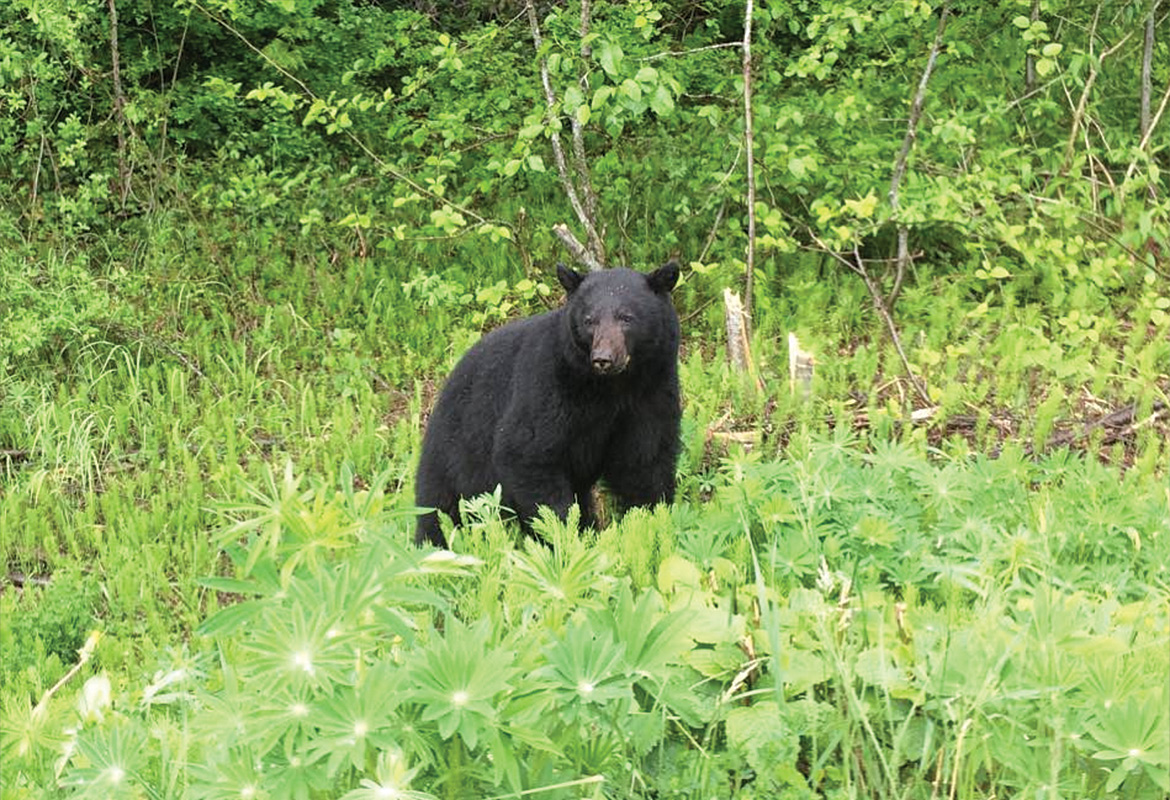
An encounter with wildlife is something visitors may experience when hiking in the Alpine. Please remember that you are a guest in their home territory! Bears, cougars and other animals are beautiful creatures and deserve our respect.
If you encounter a bear
- Do not throw food or food waste into the forest — it can attract bears, and then the bear gets into trouble.
- Do not feed wildlife. Bike in groups and make lots of noise.
- Do not run — bears can easily outrun humans, and running may trigger an attack. Pick up small children, stay in a group, back away slowly and speak softly.
- Give the bear space and an escape route. Do not approach the bear or make eye contact.
- If the bear rears up on its hind legs it is curious and trying to see or smell you better — this is not a sign of aggression. Back away slowly and talk softly.
- Watch for aggressive behaviour — swinging its head, huffs or snorts, showing teeth or claws, jaw-popping, swatting the ground, staring, panting, or laying its ears back. These usually mean the bear is stressed and asking for space. Leave the area.
If you meet a cougar
- Never approach a cougar. Although they normally avoid confrontation, all cougars are unpredictable — and one feeding on a kill may be dangerous. Always give it an avenue of escape.
- Stay calm and talk to the cougar in a confident voice.
- Pick all children up off the ground immediately — children frighten easily and rapid movements may provoke an attack.
- Do not run and do not turn your back. Face the cougar, remain upright and back away slowly.
- Do all you can to enlarge your image — don’t crouch or hide. Pick up sticks or branches and wave them about.
- If a cougar behaves aggressively, arm yourself with a large stick, throw rocks and speak loudly and firmly. Convince it that you are a threat, not prey.
- If a cougar attacks, fight back with anything — rocks, sticks, bare fists. Many people have survived cougar attacks by fighting back.
Vancouver Island Pets
Pets and domestic animals must be on a leash and under control at all times, and are not allowed off-leash in the Nordic and Alpine areas. Dogs must be leashed at all times in the Forbidden Plateau core area (Paradise Meadows). During summer and winter, dogs must be leashed, are not allowed in the Bike Park, and are permitted only on designated Nordic trails. You are responsible for their behaviour and must dispose of their excrement. Backcountry areas are not suitable for dogs due to wildlife and the potential for problems with bears. Pets are not permitted on any of our chairlifts or surface lifts — thank you for understanding.
Know the code
Every skier and rider shares the slopes.
Skiing, snowboarding, biking and other activities that take place at ski areas involve the risk of injury. This Safety & Risk Awareness guide is here to inform you of the risks, dangers and hazards you may encounter at a ski area — and to help you stay safe while enjoying these activities.
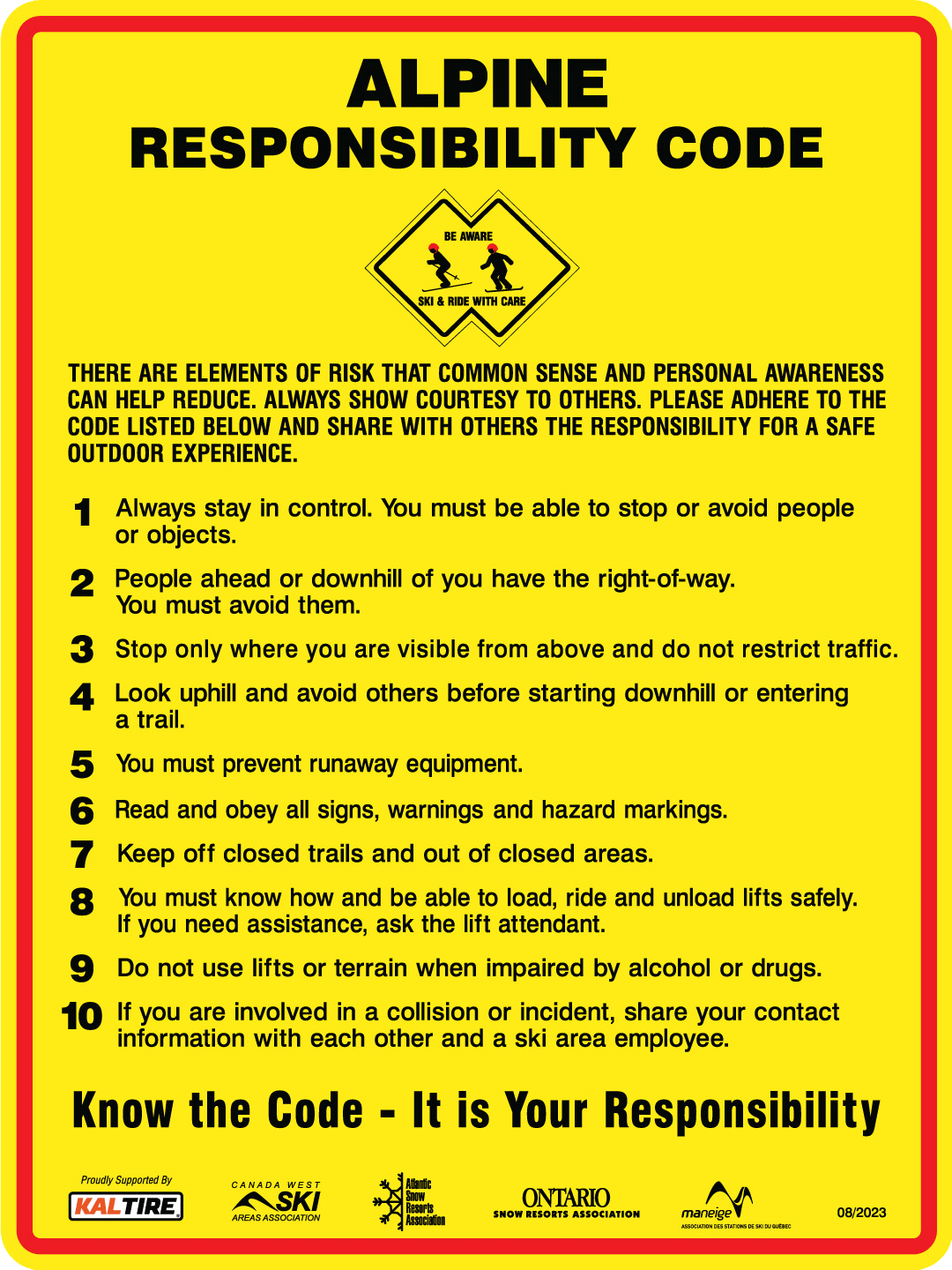
The Alpine Responsibility Code
The Alpine Responsibility Code applies to all skiers and snowboarders. There are elements of risk that common sense and personal awareness can help reduce. Regardless of how you decide to use the slopes, always show courtesy to others — be aware, and ski and ride with care.
- Always stay in control. You must be able to stop or avoid other people or objects.
- People ahead of you have the right-of-way. You must avoid them.
- Stop only where you are visible from above and do not restrict traffic.
- Look uphill and avoid others before starting downhill or entering a trail.
- You must prevent runaway equipment.
- Read and obey all signs, warnings, and hazard markings.
- Keep off closed trails and out of closed areas.
- You must know how and be able to load, ride, and unload lifts safely. If you need assistance, ask the lift attendant.
- Do not use lifts or terrain when impaired by alcohol or drugs.
- If you are involved in a collision or accident, share your contact information with each other and a ski area employee.
What happens if you break the code?
Violation of skiing / boarding policies by Mount Washington Alpine Resort users could result in loss of lift privileges:
- Violation of the Alpine Responsibility Code.
- Violation of the Alpine Responsibility Code resulting in a collision.
- Leaving the scene of an incident in which you were involved, or failing to report the incident to Patrol.
- Being uncooperative, use of inappropriate language and/or attempting to evade Patrol or other authority.
- Skiing or boarding permanently closed areas or avalanche-closed areas.
Consequences escalate with each offence — 1st offence: loss of lift privileges for one week up to the duration of the season; 2nd offence: two weeks up to the duration of the season; 3rd offence: loss of privileges for the remainder of the season. Serious violations (collisions, evading Patrol, entering closed or avalanche-closed areas) can carry a 4–6 week suspension or loss of privileges for the remainder of the season.
Basic Safety
- Plan ahead for variations in weather; dress and gear up appropriately. Properly tuned gear, warmth and visibility are key components of safety — if in doubt, check us out at the Rossignol Demo Centre or the Outdoor Elements retail store.
- Be aware of changing snow-surface conditions. Check the groomed-run reports on our website or smartphone app.
- Only ski and snowboard in areas compatible with your ability — progression is the key to safe success.
- If you fall and you are unhurt, on the slopes or the chairlift ramp, move quickly to the side to avoid becoming an obstacle for other skiers or riders.
- Slow-skiing areas are intended for beginner skiers — passing or jumping are not allowed in these areas.
- It is your responsibility to follow the Alpine Responsibility Code or Nordic Responsibility Code at all times.
- Mount Washington’s inbound terrain includes natural hazards such as cliffs and cornices. Ski with caution — unmarked objects and hazards may exist.
Safe Slopes Team
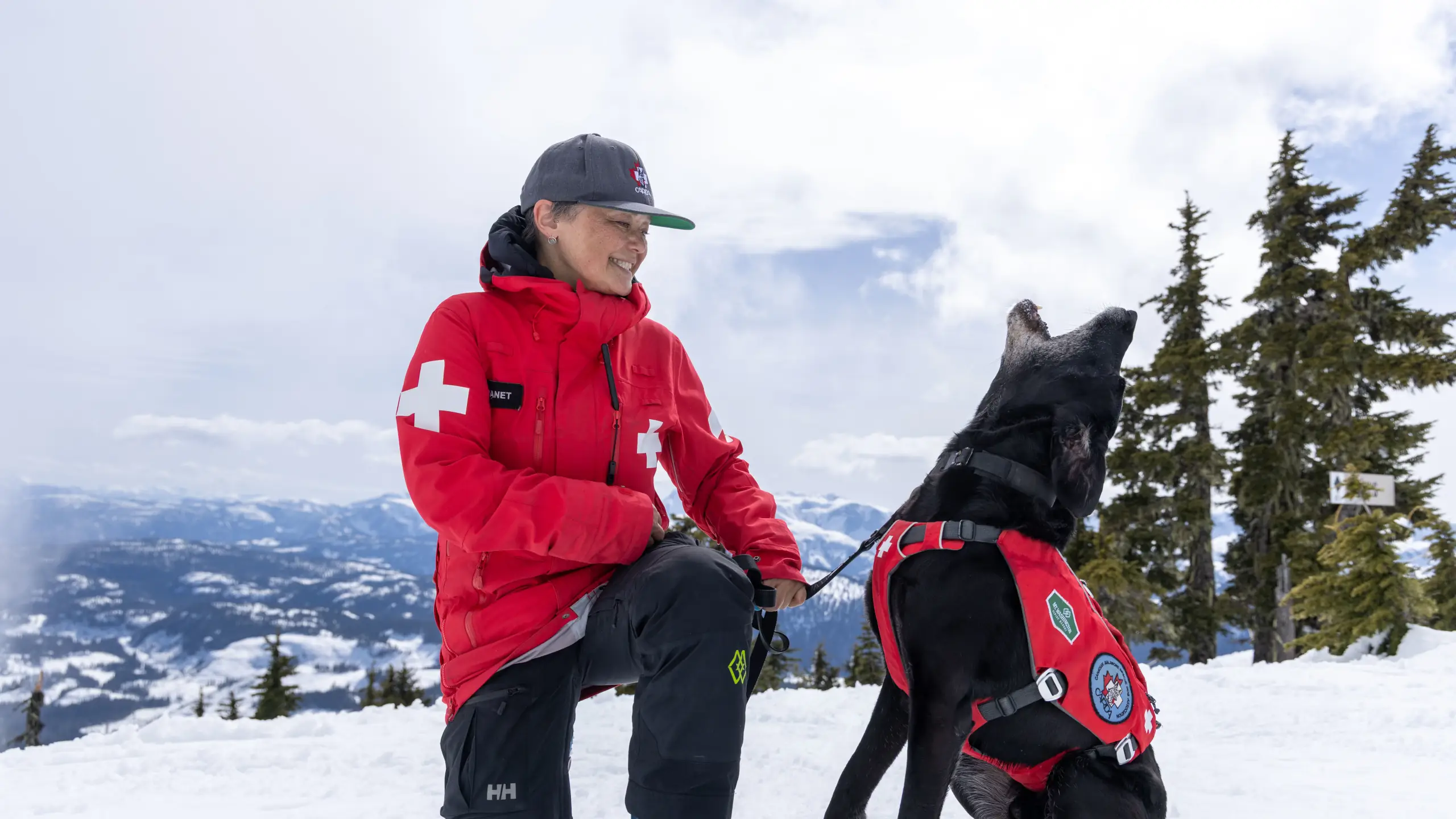
Our full-time Safe Slopes team members are out on the hill day and night during operation, patrolling the runs and enforcing the Alpine Responsibility Code. They watch for people who violate the A.R.C. or ride recklessly in slow zones and other areas — offering tips and rewards for being in compliance, but also issuing warnings and, in severe cases, suspending skiing privileges. Know the Code — it is your responsibility! You can help the team by riding in control, travelling at the same speed as others in Slow Zones, and using common sense and courtesy on our mountain.
Helmet Usage
Mount Washington Alpine Resort recommends wearing helmets for skiing and riding. Skiers and snowboarders are encouraged to educate themselves on the benefits and limitations of helmet usage. The primary safety consideration, and obligation under the Alpine Responsibility Code, is to ski and ride in a controlled and responsible manner.
Tobogganing Policy
Tobogganing (snow disks, crazy carpets, GT Snow Racers, garbage bags or any other non-approved sliding devices) is not permitted on any Mount Washington property, with the exception of the Nordic Tobogganing area at the Raven Lodge. A much better option is the Snow Tubing Park — a safe, controlled sliding environment, and you don’t have to walk uphill: there’s a lift!
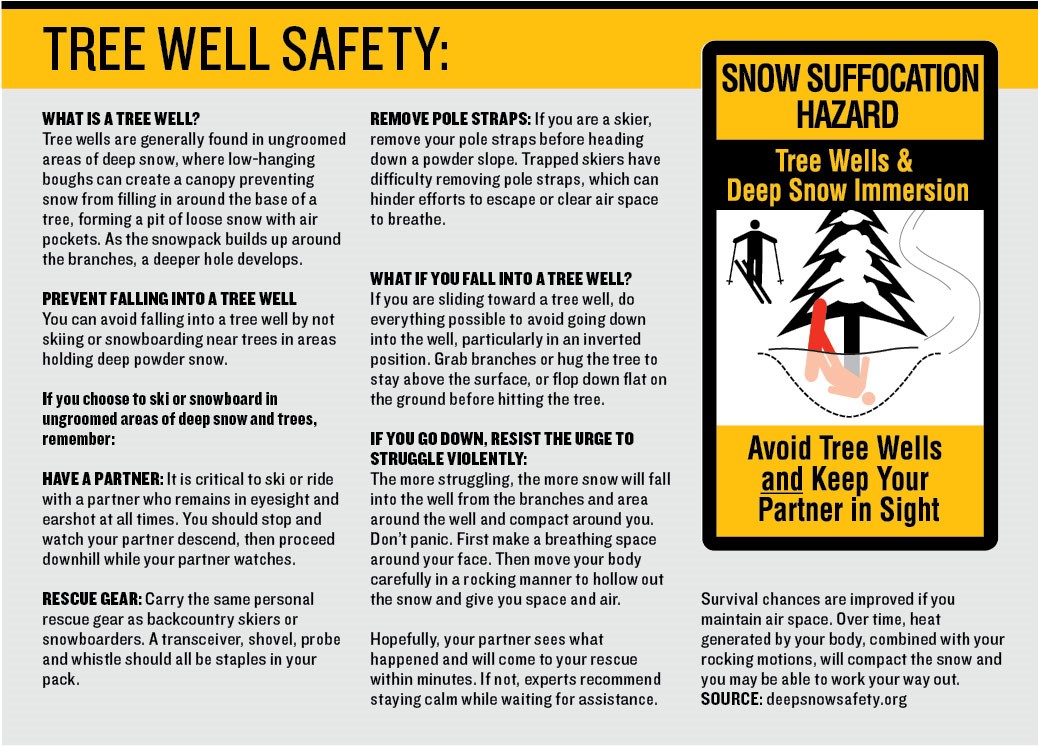
Tree Well Awareness
Natural hazards such as tree wells occur within and outside the ski-area boundary. A tree well is a hole or depression that forms around the base of a tree as snow accumulates. A tree-well incident occurs when a person falls — often head first — into deep snow around the base of a tree and becomes immobilized; the more the person struggles, the more entrapped they become. The risk of a tree-well accident can be reduced by following a few basic practices:
- Always ski or ride with a partner.
- Keep your partner in sight and stay in visual contact so they can see you if you fall.
- Stay close enough to either pull or dig each other out.
Common Questions
How can I tell that I’m in a Slow Zone?
There are a couple of ways. First, have a look at our trail map — the Slow Zones are highlighted in green, and you’ll notice that most of them are beginner runs. When you’re on the mountain, look for ‘Slow’ or ‘Slow Zone’ banners.
How fast is too fast?
Many people forget what it was like to be a beginner — worrying about whether there’s enough space to attempt a turn. So first, give people some space. Next, remember that you must always be in control, whether on an expert run or in a Slow Zone — this is the first point of the Alpine Responsibility Code. If you are in the air, you have no control over your speed or direction, so jumps and hits are not allowed in Slow Zones. The speed expected is relative to how many people are on the run: if there is no one on the run you may make short-radius turns; when there are more people, the 10% Rule applies — you may pass others at approximately 10% faster than the flow of traffic.
Why can’t I go as fast as I want when there’s no one else on the run?
The Slow Zones are on beginner runs, and one of their biggest users are kids. Kids don’t have a high awareness of what other people are doing and are easily distracted — they might veer across the run to look at something without checking who’s coming. Kids and adults who are learning also tend to fall on terrain transitions (knolls) and can be recovering from a crash in an area that can’t be seen from above.
Is uphill travel allowed?
Mount Washington does not allow uphill travel on any of our Alpine runs at this time. Uphill travel is restricted to select Nordic trails only. This does not include areas specifically designated for boot-packing — never on runs.
What equipment is not permitted?
Always use and wear the appropriate device to prevent runaway equipment. The following are not permitted at Mount Washington Alpine Resort: snowblades, snow bikes, snowscooters, snowskates and boot-skis. It is also forbidden to slide down the slopes on a sled, crazy carpet, three-skis or toboggan. Mini-skis and snowskates are not permitted, even with standard ski bindings.
Trail Difficulty
Every run carries a difficulty symbol. Ratings are relative to this mountain — always start within your ability and progress from there.
Green Circle
Easiest
The easiest runs on the mountain. Green runs are groomed, generally wide and have gentle slopes. Where there is a steeper pitch, the pitch is wide to allow for big turns.
Blue Square
More Difficult
This category has the greatest variation in runs — these runs are more difficult, and can be groomed or ungroomed.
Black Diamond
Difficult
Difficult runs, generally ungroomed, steeper and narrower. Before attempting black runs, you should be comfortable on ungroomed blue runs.
Double Black Diamond
Experts Only
The most difficult expert terrain on the mountain — ungroomed, steep and narrow.
Terrain Signage
Signs you may encounter around Mount Washington Alpine Resort. Read and obey all of them — it is your responsibility to know where you are at all times.
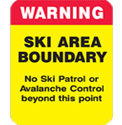
Ski Area Boundary
Boundary signs mark the edge of the patrolled, in-bounds ski area. It is your responsibility to know where you are at all times.
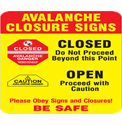
Avalanche Closure
Our avalanche-closure signage marks temporary closures within the ski-area boundary while active avalanche control is taking place, or when the hazard is too high to control. No access is permitted — lift-access privileges will be revoked.
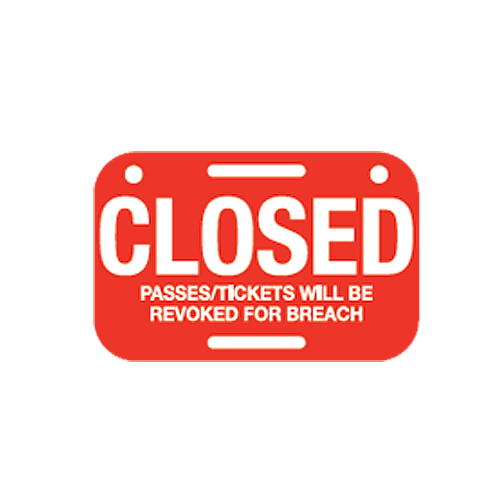
Closed — Closed Means Closed
When a run or area is marked with a closed sign, it’s for a specific reason — the hazards there are too great to allow guests in. Runs close for many reasons: fallen trees, ditches or holes that make the run unsafe, a race or event, terrain parks that aren’t ready to open, or machinery operating. Whatever the reason, the closure is there to protect you from injury. Please respect all closures for your safety.
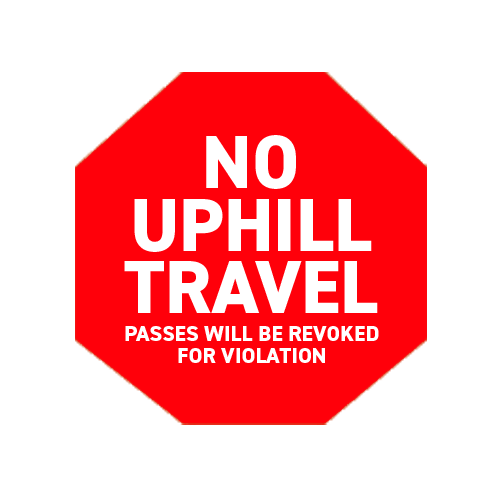
No Uphill Travel / No Hiking
These signs mark areas where uphill travel is restricted to manage a specific part of the resort — for example during early-season conditions, or to keep guests away from areas that may hold hazards. Please obey these signs for your safety.
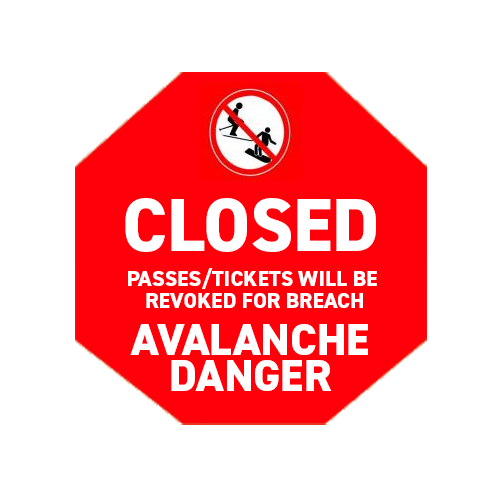
Permanent Avalanche Closure
These signs mark areas deemed permanently closed due to the nature of the terrain and its exposure to avalanche danger. These areas stay closed all season; any guest found entering will have their ski pass suspended for two weeks and must speak with a duty forecaster before it is reinstated.
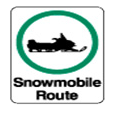
Snowmobiles
These signs indicate you may encounter snowmobiles. If one is coming towards you, make eye contact with the operator, slow down and — without crossing its path — move to the opposite side and stop. If that isn’t possible, move to the side of the run and stop. Make sure it’s all clear before starting downhill again.
Marginal Skiing. Marginal-skiing signs identify runs with limited snow cover that are still considered ‘skiable’. These runs may have exposed rocks, grass and dirt, and damage to your equipment is likely — it’s best to avoid them, or at the very least ski and ride with extreme caution.
Lift Safety
Loading
- Load at designated areas only.
- Read the rules for each lift carefully before loading.
- Gear must be attached to your feet — carrying your gear is not permitted.
- No winter-season foot passengers or travel without ski/snowboard equipment.
- Remove the pole straps from your wrists and hold the poles point-down before entering the loading area.
- Sit down properly, hold on to safety equipment and lower the safety bar.
While Riding
- Listen to and obey the operator’s instructions at all times.
- Keep the tips of your skis or snowboard up.
- Keep long hair, hats and scarves secure to avoid entanglement.
- Remain seated — don’t bounce or swing on the chairlift.
- Never throw or drop anything from the lift.
- Mt. Washington is a smoke-free resort. Smoking is not permitted anywhere.
- Tots 3+ are permitted to ride the chairlifts and must be able to aid in self-rescue in the unlikely event of an emergency.
Unloading
- Unload at designated areas only and clear the unloading area immediately.
- Listen to and obey the operator’s instructions at all times.
- Report any problems or concerns to the lift operator right away.
Slow for Collision Safety
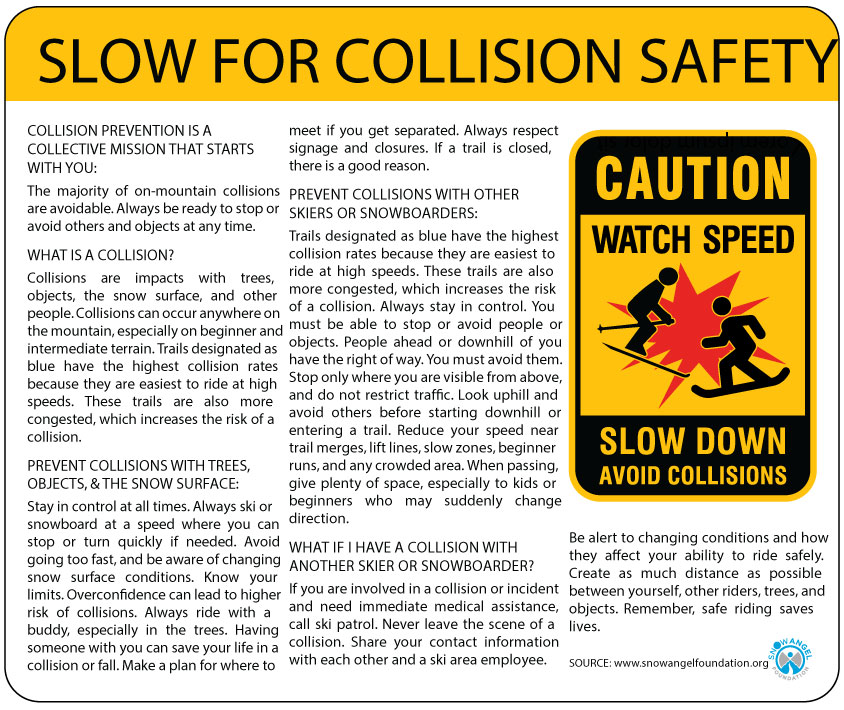
Collision safety promotes responsible skiing and riding to reduce the risk of a collision between two or more skiers and riders. Sometimes skiers collide — we share the slopes with people of all ages, abilities and sizes. Your awareness of those around you and of the surrounding environment, along with responsible skiing and riding, are the best ways to reduce the risk of a collision with another skier or an object.
#RideAnotherDay
Awareness, responsibility and common sense.
Five-year-old Elise Johnson was just learning to ski when an out-of-control rider struck and killed her. Her parents, Kelli and Chauncy Johnson, wanted to help prevent such accidents befalling other families, and generously created the #RideAnotherDay campaign in partnership with the NSAA. The campaign encourages awareness, responsibility and common sense to reduce the risk of on-mountain collisions. Watch below to learn what you can do to promote safety on the hill.
Aerial Photography & Drones
Drone policy update (January 2025): Mount Washington Alpine Resort reserves the right to authorize drone usage on any mountain property. At this time, public operators are not permitted to fly any drone equipment on the slopes or surrounding areas.
- Please refrain from flying drones over any mountain locations — including mountain terrain, chairlifts, parking lots, buildings and public spaces.
- Operating drones within BC Parks / Strathcona Park is never permitted.
- With pre-approval and the necessary insurance, some third-party content partners may be permitted case-by-case to fly drones for special events.
- Anyone found in violation of this drone policy will have their mountain access (ticket / season pass) suspended.